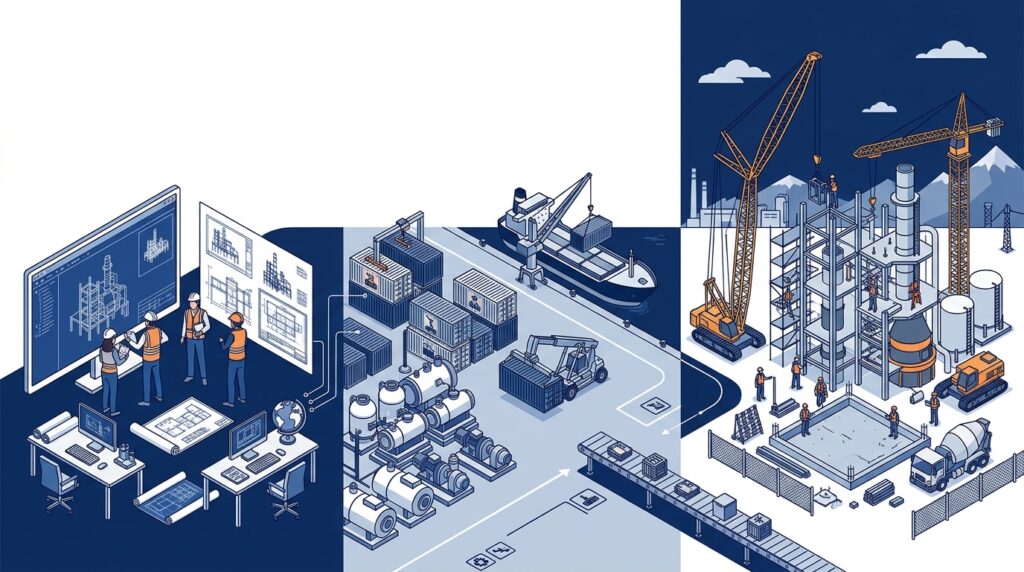
An EPC contract is a single agreement, but behind it are three distinct stages—each with its own activities, risks, and owner touchpoints.
Stage 1: Engineering
Where the plant is designed: basic and detailed design, calculations, and technical documentation (P&IDs, datasheets, manuals).
Why it matters most: Decisions here drive capital cost, operating cost, schedule, and plant performance. This is the owner’s window of maximum influence—changes after construction begins are expensive and slow.
Owner touchpoints: Design reviews, equipment selection, HAZOP studies, interface definition (owner vs. contractor scope), documentation review.
Stage 2: Procurement
Sourcing all equipment, materials, and services—vendor qualification, RFQs, bid evaluation, purchase orders, expediting, inspection, and logistics.
Common delay causes: Long lead times (12–24 months for turbines, generators, large vessels), vendor capacity limits, supply chain disruptions, quality failures, and price volatility.
Lesson for owners: Start procurement early. Long-lead items should be identified during engineering and ordered as soon as the design is firm.
Owner touchpoints: Vendor list approval, critical equipment review, inspection witness points, delivery schedule review, change order review.
Stage 3: Construction
Physical execution: site prep, civil/structural works, mechanical erection, electrical and instrumentation, testing and commissioning, and handover.
Highest risks: Safety (heavy lifting, work at height), complex subcontractor coordination, schedule pressure, and quality issues surfacing during installation.
Owner touchpoints: Site progress meetings, safety audits, quality inspections, witness testing, punch list review, commissioning attendance.
How the Stages Overlap
They are sequential on paper but overlap in practice: long-lead procurement starts before detailed design is finished; civil works begin while equipment is still being manufactured; design changes during construction happen but are costly. This overlap is what makes EPC delivery complex.
Why Japanese EPC Firms Excel
- Front-loaded engineering — more design time up front, fewer costly changes later
- Early procurement planning — long-lead items identified and ordered promptly
- Strong site management — detailed planning, safety focus, quality control
- Integrated communication — engineering, procurement, and construction teams work closely
The result: fewer surprises, even if the initial schedule looks slower.
What Owners Should Focus On
- Clear scope definition before signing the contract
- Active participation in design reviews and key decisions
- Regular progress monitoring during procurement and construction
- Documentation of all changes, approvals, and decisions
- Commissioning involvement to ensure guarantees are met
Conclusion
Good engineering drives good procurement, and good procurement enables good construction. Owners who understand each stage’s risks and stay engaged at the right touchpoints keep projects on track—regardless of plant size.